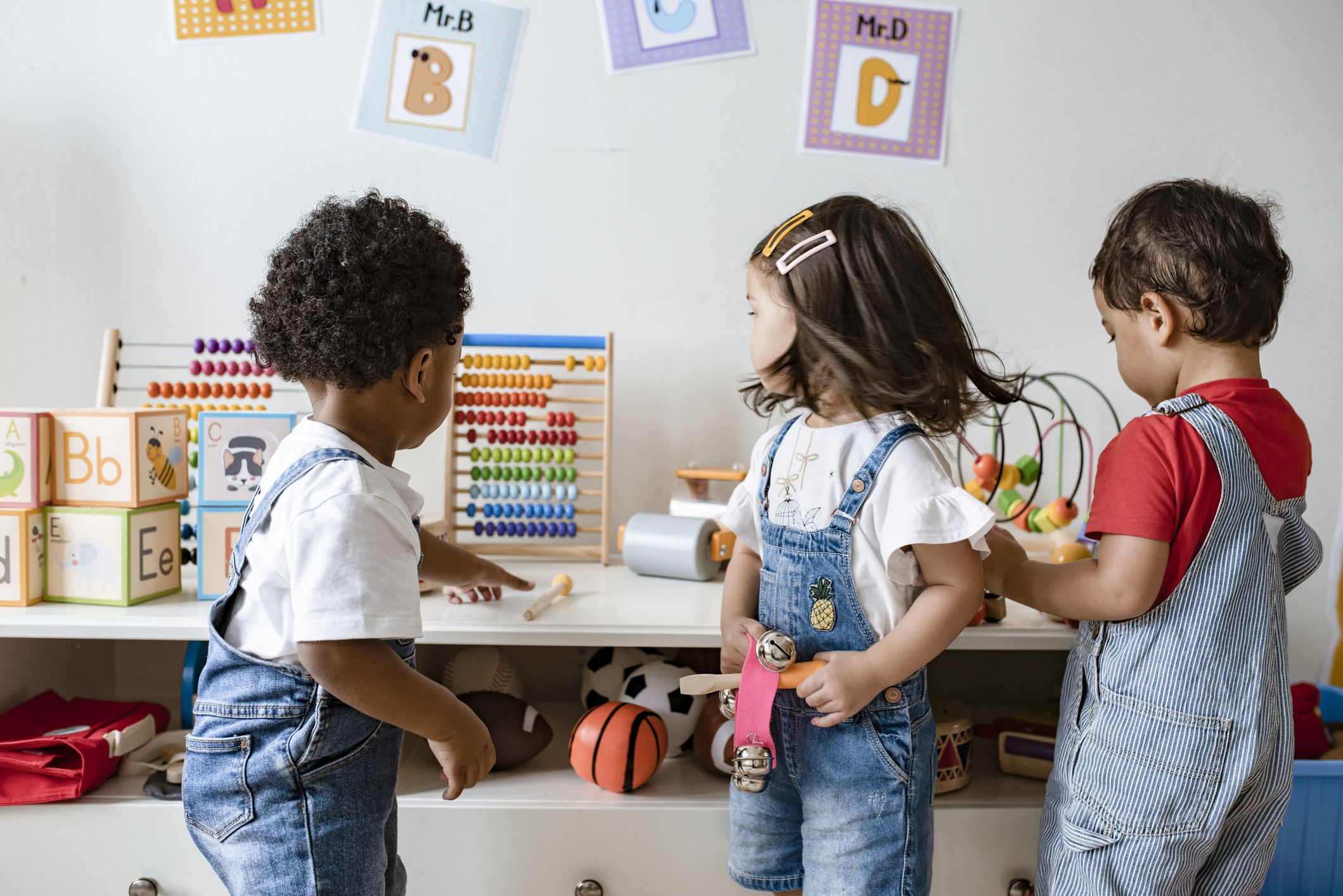
Language development in preschool children is pretty fascinating to observe. While we all know that children learn by imitation and repetition, seeing it in action is incredible. Over the past few months, I have been particularly focused on observing our Buds Class children, who range between the ages of 15 months and 3 years old. They are our little “United Nations,” coming from bi-cultural and mono-cultural families from Japan, China, Sweden, Taiwan, America, England, Egypt, and Dubai. Their teachers are from America, Australia, Japan, and the Philippines. All in all, they are immersed in an assortment of languages and cultures at home. At school, however, our language of instruction is English, and despite their diverse backgrounds, they communicate using English words combined with their own babbling and personal ways of expressing themselves.
What has stood out for me is their ability to repeat phrases and ask for their needs to be met by echoing what their teachers have been saying to them, day in and day out. They use these phrases in context, and when introduced to something new, they automatically repeat it and subsequently add new and complex words into their repertoires. Decoding language is a skill that all preschool teachers become professional at over the years, especially as children develop their verbal abilities. We learn what they are trying to say and are acutely aware of how frustrating it can be when someone asks you over and over, “What did you say?”
However, making sense of the world does not only happen through the spoken word. As Loris Malaguzzi famously said: “Children have 100 languages.” They are able to communicate in many different ways, and as teachers, it is also our role and responsibility to tune into observing these many languages that emerge each day.
When starting Ohana International School 17 years ago, I had to open a multiage class because I had no idea who was going to enrol. What I learned after all my years of teaching around the world is that multiage classrooms are the only way to go in preschool—and perhaps in other classes as well. This is not to say there are no challenges; as teachers, we have to learn how to juggle learning in small groups and large groups while teaching to the top. But we live in multiage communities, so why do we think that children should learn in a mono-age classroom? Our learning takes place on many levels, and as an early childhood educator, I believe schools often fail to accommodate this reality. We do not exist in boxes, so why are we placed in them?
When I think about the number of entrepreneurs that emerge later in life, I wonder if this is a result of young adults finding their way in diverse work environments with people of varying ages—environments that give them the space to be who they truly are. Discovering who we are can only take place if we have the room to breathe and live our truth. Working in multiage environments is the key to that discovery.
Not only will language evolve this way, but exposure to language—as well as understanding its nuance—deepens immeasurably. Our young children in all classes develop language at a much faster pace than children in mono-age classes. Alongside this exponential growth in language comes the development of core values: compassion, empathy, motivation, and inspiration. Our older children assist the younger ones with tasks that can sometimes appear challenging, while the younger children are driven to emulate their older peers.
In the end, what we are witnessing in our Buds Class is not merely language acquisition; it is the building of a micro-community. The children are not just learning words—they are learning how to connect, how to ask for help, how to offer it, and how to navigate a world that is rich with difference. The multilingual, multiage model does more than accelerate vocabulary; it cultivates emotional intelligence and a genuine sense of belonging. It reminds us that education is not about filling a child with facts, but about nurturing their innate ability to communicate, collaborate, and care. When we step out of rigid, age-segregated boxes and embrace the natural diversity of human development, we give children the greatest gift of all: the freedom to find their own voice, in all its hundred forms. And that, I believe, is the true purpose of early education.