In the world of early childhood education, the phrase “expect the unexpected” has traditionally carried a gentle, manageable meaning. For a teacher of 15 months to 3-year-olds, it can mean a drink bottle falling on the floor at snack time, a surprise change in the weather that makes us change our plan for outdoor play, or a beloved book that has torn pages which then leads us into a discussion on book care. For a teacher of 3 to 5-year-olds, it can mean a child arriving in a superhero cape, which stimulates a discussion on what superheroes can do and what humans can do, a birthday party for a child that brings change into the daily schedule, or a fire drill interrupting the most perfectly orchestrated lesson on any subject.
But today, as we glance at the headlines, this phrase has taken on a heavier, more urgent resonance. We are living through an era of endless crises in the world and most of us are ill equipped on how to manage them for ourselves, never mind, how to guide the children in our care though them. We are faced with a rapid digital transformation that we struggle to navigate. For the world of children aged 15 months to 5½ years old, the most plastic, absorbent, and vulnerable stage of human development, the call to “expect the unexpected” is no longer just a pedagogical tip. It has become a foundational philosophy for survival, resilience, and growth.
Consider the world our youngest learners are inheriting. When we say, “expect the unexpected,” we are acknowledging that a child born in 2020 has already lived through a global health crisis that reshaped adult behaviour. Adults and children were witnessed wearing masks (hiding their emotional expressions), having screens on tables in schools, offices and restaurants, distancing ourselves from others which in Tokyo, is impossible when you are riding a train at peak hour, and generally there was a pervasive background hum of anxiety.
Today, as those children enter our classrooms, we see the echoes of the 2020’s. Some display separation anxiety more intensely. The unexpected is now baked into their short biographies. Early childhood educators are, therefore, not just teaching colours and counting. They are helping rewire tiny nervous systems that learned, implicitly, that the world can change overnight.
For a 15-month-old, the world is supposed to be a predictable sequence of faces, meals, naps, and play. And it is and it can be!
Neuroscience tells us that the brain’s architecture from birth to age five is built on repetition, routine, and reliable relationships. When a 2-year-old knows that after hand-washing comes snack, and after snack comes story time, their brain releases calming neurochemicals. Predictability reduces cortisol (the stress hormone) and allows oxytocin and dopamine to support learning and connection.
But how do we offer predictability when the world outside refuses to cooperate? This is where “expect the unexpected” transforms from a warning into a superpower. In early childhood education, the first step is accepting that certainty is an illusion. The second step is building a curriculum with flexible stability.
For children between 15 months and 5½ years old, the classroom must become an anchor. Not a rigid anchor, for rigidity breaks under unexpected waves, but a responsive one. Here is how we embody this principle daily:
1. Rituals, Not Rigid Rules – our daily schedules are created with elasticity. There are “rubber bands” in each schedule that allow for changes to occur that create the least amount of insecurity, in the disruption. Our rituals are the constant and not the clock.
2. Truthful Emotional Transparency
When something unexpected happens, our masterful teachers redirect experiences or activities that maintain the trust that is there in the classroom each and every day. Change is inevitable and it is embraced in a warm, loving tone that holds the children safely and makes one day feel as safe as the next.
3. Planned Spontaneity
Paradoxically, to expect the unexpected, we must plan for it. All teachers in our school have a “box of surprises”. These come out at a number of opportunities and allow for flexibility and resulting fun to ensue.
4. The Power of the Pause
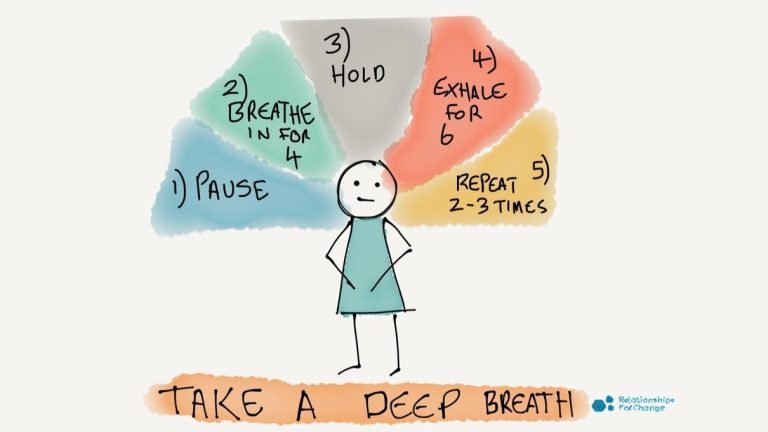
Between 15 months and 5½ years, children are exquisitely attuned to adult stress. When an unexpected event occurs, the most powerful intervention is a regulated adult. Deep breathing is a technique used in our classes to assist children when having stressful moments which can be in the form of an emotional meltdown. In the same way, that we would choose silence over an explanation (which is unproductive) before responding, the teacher takes a deep breath. That second of pause signals to the child that everything is okay. Neuroscience calls this “co-regulation.” The child borrows the teacher’s calm until their own nervous system matures enough to generate it.
If we are honest, the “unexpected” in early childhood is not only challenging, but it can also be surprisingly beautiful. On any given day, a 2½-year-old might use a block not as a building tool but as a phone to call a grandparent living in another country, allowing them to connect with a loved one far away. A 4-year-old might refuse to line up not from defiance but because they noticed a spider building a web in the corner, and they are spellbound by the physics of silk. A 15-month-old might walk for the first time not on the soft carpet but on a patch of wet grass after an unexpected rain shower, laughing at the tingling sensation in his/her feet.
When we “expect the unexpected” in early childhood education, we open ourselves to wonder. We stop forcing children into predetermined outcomes and instead watch for the emergent curriculum: the sudden interest in shadows, the spontaneous song about a leaf, the question about why the sky is crying (rain). These moments cannot be scripted. They are gifts of the unpredictable.
Let us remember that the children in our care, who are laughing as their teachers spread paint on the palms of their hands, or those who are learning to zip up their coats or crying because their apple fell on the floor, will be adults in the 2040s and 2050s. By then, the pace of change will have accelerated further. The jobs they will hold, the challenges they will face, and the solutions they will need do not yet exist. To prepare them for that world, we cannot give them a map. There is no map. There is only the ability to navigate without one.
Thus, every time we help a child recover from a spilled snack without shame, or guide a preschooler through a sudden schedule change with kindness, or sit with a 5-year-old in the quiet aftermath of their distress, we are doing something profound. We are building the neural foundations of cognitive flexibility, emotional agility, and resilient hope.
So, yes. “Expect the unexpected”. In the light of what is going on in the world, early childhood educators are the first responders of the human spirit. For children aged 15 months to 5½ years old, the classroom becomes a microcosm of the larger world, but a gentler one. Here, the unexpected is not a catastrophe; it is a curriculum. Here, unpredictability does not break a child, with the right support, it strengthens them.
Let us teach them not that the world is always safe, for that would be dishonest, but that even when the world surprises us, we have tools in place to handle them. We have each other. We can breathe, adapt, and find joy in the unplanned. That is the deepest lesson of “expect the unexpected.” And there is no better place to learn it than in a preschool, with paint on tiny fingers and a teacher who knows that the best plans are the ones that can change.