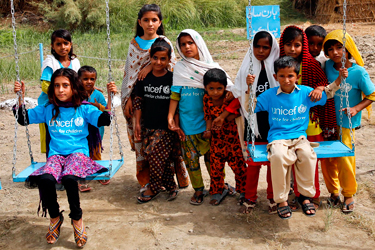
The topic I would like to talk about today is educational equality. Being born in India, where giving education to a child, especially a female child, is not of relevance, overlooking that, most of the population is under the poverty level and cannot afford any education. It holds a close and personal meaning for me, as I have seen firsthand how profoundly it can impact a child’s life. I had the opportunity to work with UNICEF Indian about 6 years ago, and I would like to share my thoughts on organizations and barriers in education.
The definition of Educational equity refers to equality in education. It is a measurement of achievements, fairness, and opportunity in education. The study of education equity is often linked with the study of excellence and equity. Educational equity is dependent on two main factors. The first is fairness, which implies that factors specific to one’s conditions should not interfere with the potential for academic success. The second important factor is inclusion, which refers to a comprehensive standard that applies to everyone in a particular education system. These two factors are closely related and mutually dependent for the true academic success of an educational system.
International organizations, such as UNICEF, work to improve the lives of every child, particularly those of young girls and the most vulnerable, around the world. Despite progress in recent years, girls continue to suffer severe disadvantage and exclusion in education systems throughout their lives.
UNICEF research shows that an estimated 31 million girls of primary school age and 32 million girls of lower secondary school age were out of school in 2013. Sub-Saharan Africa has the lowest proportion of countries with gender parity, with only two out of 35 countries achieving this goal. Looking at these statistics, it comes as no surprise that girls still suffer in third-world countries. Education for girls or any child is their birthright. Providing a child with education helps break the cycle of poverty. As for girls, it holds more power, as UNICEF research shows:
“Educated women are less likely to marry early and against their will; less likely to die in childbirth; more likely to have healthy babies; and are more likely to send their children to school. When all children have access to a quality education rooted in human rights and gender equality, it creates a ripple effect of opportunity that influences generations to come.”
Barriers to educational equality
The list of barriers to educational equality is extensive and ongoing, affecting people worldwide. From governmental influences, finances, to society, cultures, religion, conflicts, rural location, etc. While gender parity has improved, barriers and bottlenecks around gender disparities and discrimination remain in place, especially at the secondary school level and among the most marginalized children.
Increasingly more adolescent children are also facing economic and social problems in their personal lives that further disrupt their education.
Another study by UNICEF shows that:
“Girls in the developing world are married before age 18, and one-third of women in the developing world give birth before age 20. If all girls had secondary education in sub-Saharan Africa and South and West Asia, child marriage would fall by 64 per cent, from almost 2.9 million to just over 1 million.”
UNICEF aims to continue to take a more transformative approach to girls’ education by tackling discrimination, violence, and the exclusion of girls from education. As such, programming in girls’ education will focus on empowering girls in tandem with improving their learning and measuring learning outcomes.
While UNICEF is a vast organization well-connected with financial aid and support, I believe that smaller organizations in countries still require assistance, especially in extreme rural areas. This can only be achieved with local organizations that work in conjunction with the government or big organizations like UNICEF.
One such organization amongst many is ASHA for Education. They help to empower underprivileged children by providing access to education. In the summer of 1991, a group of students came together to consider ways they could contribute to India’s development, the country of their origin. These young people shared the belief that education is a critical requisite and an effective catalyst for social and economic change in India. Basic education became the primary focus of this group, which emerged from the gathering. The group was named ASHA to represent the meaning of hope, which had brought these individuals together, and the hope that they aimed to bring into the lives of children in India. In the summer of 1991, ASHA was founded at the University of California, Berkeley.
ASHA is an entirely volunteer-run, nonprofit organization with over 50 chapters worldwide. Their mission is to encourage the formation of various local groups worldwide to reach out to broader sections of the population. To promote socio-economic change in India through the education of underprivileged children.
They get involved by holding fundraisers or asking donors and volunteers to help with individual projects within an assigned state. You will be required to attend and assist them with any physical needs they may have. Another option is the ASHA Support A Child program. Similar to many international services, it allows you to support a child’s expenses through monthly contributions. This organization was founded by three young students who recognized and acknowledged the hardships children faced in India while they were studying abroad. They decided to involve and build a community for Indians living abroad and ask for their help in creating a better future for the children.
“They collect small amounts from people concerned about the marginalized and the poor and offer finance and fellowships. There are only two institutes I know that are working from abroad, and Asha is one of them. It’s a commendable way of helping India.” – Times of India.
Website: http://new.ashanet.org/
Another Indian-based organization that my family has personally worked with is Udavum Karangal, meaning ‘helping hands’. It is a centre for humane services that work in conjunction with educational equality. Udavum Karangal believes that a good education is essential to making a child self-reliant. The school imparts value-based education not only to children in the local area but also to children from other impoverished families across the country, promoting quality and understanding within India’s caste system. They have the noon-meal scheme, which has been well-received by the community.
One amazing project they take part in is the “Wings Mobile School-a school on wheels”. The organization believes the most significant wealth that can be achieved is education. Udavum Karangal has extended its literacy program to these socially and economically marginalized children who are not integrated into the regular mainstream educational system through a mobile school project called ‘Wings Mobile School’. They aim to educate children aged 4-11 who do not have access to permanent schooling facilities. In the mobile school, they strive to provide food, quality medical care, and informal education, aiming to improve their quality of life.
Website: http://www.udavumkarangal.org/index.php
Other organizations in the U.S, like the CCSSO(Council of Chief State School Officers) and CCSS Common Core State Standards, aim for the same for their country in different ways.
The CCSSO aims to create a public education system that prepares every child for lifelong learning, work, and citizenship. By focusing on those state-driven leverage points, they are well-positioned to increase their capacity to produce students who are ready to succeed as productive members of society. The CCSS establishes clear, consistent guidelines for what their students should know and be able to do in mathematics and English language arts, from kindergarten through 12th Grade.
Big organizations like UNICEF and UNESCO bring the world’s attention to the importance of equality in education, while small groups like ASHA play an essential role in implementing it. For third-world countries, more than the curriculum and core studies, the main priority is to ensure that each child can and should attend school, regardless of their circumstances. This is the biggest hurdle that big and small organizations face.
In my experience in the education sector, it shows that the first step towards universal primary education lies in universal pre-school education. This plays a pivotal role in laying a strong foundation for a child’s intellectual, physical, and social development. Trying to establish the importance of this remains a challenge in non-third-world countries.
To conclude, acquiring basic learning skills such as learning, reading, and writing during preschool and primary education is essential for a child’s success in higher education and helps reduce drop-out rates for the future. It is up to us as a society to support and aid, to the best of our ability, organizations that seek to help primary education.
Please feel free to donate to the organizations listed above. Thank you.
References:
The Council of Chief State School Officers (The Council of Chief State School Officers)
Preparing America’s students for success. (Home)
Basic education and gender equality (UNICEF)
http://www.unicef.org/education/