Independence is something that a child must acquire on their own, physically, psychologically, and emotionally. Independence is not something that can be given by one person to another; it is something that can only be achieved by oneself. We can’t teach independence, but instead we must provide an environment and opportunities for children to develop independence.
So, what could we do in our homes to help children on the never-ending road to ever-increasing independence? Well, no manual gives all the answers, but what seems clear is that the more comfortable a child feels in their surroundings, and the better access they have to meaningful activities that satisfy their natural curiosities, the more successful they will be at mastering the skills necessary to support the move towards greater independence. You might be surprised at how many simple activities are available that help our little ones develop skills and confidence. The key component is to involve our children in meaningful, purposeful, and age-appropriate tasks. Let’s look at some examples:
Kitchen
Why buy a toy kitchen when you already have the real thing?! Involve them in the kitchen as much as possible (or as much as your patience allows!). Set up the kitchen so that their items are easily accessible: bowls, plates, cups, forks, spoons, etc. When it’s time to eat, they can easily set the table for themselves and feel a sense of accomplishment in the process.
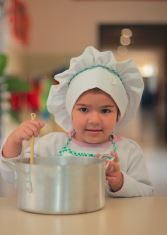
Include them in cooking, start with simple tasks, such as stirring, scooping, kneading, mashing, measuring, pouring, and peeling. Expect things to get messy; that’s okay! All these tasks help develop fine motor skills, and with repetition and practice, individuals will start to master tasks without assistance and decrease the amount of mess.
There are several foods a two-year-old can prepare themselves, some with minimal assistance, such as peeling bananas, boiling eggs, or washing fruits in a colander, and learning to spread butter on bread. They can also shape a rice ball in their hands or roll norimaki. Smoothies are super easy, healthy, and fun. Making pizza, pancakes, and muffins all involve several steps, as well as teaching the child that cooking can be a time-consuming process, so patience is required. Not only is cooking great for their fine motor skills, but children are also more likely to eat the food they helped prepare.
Young children love to be involved in what you are doing. Cleaning is not a chore for them; it is simply an activity and learning experience. Allow them to experience washing their dishes; they can enjoy the sensory experience with water, soap, sponges, and more, while helping out with the housework.
Windows, Balcony doors, Mirrors
Equip them with a small spray bottle (filled with water or chemical-free soaps) and a small cloth or window squeegee. Let them spray (not too much, one or two sprays are enough) and wipe
the surfaces. Cleaning the outside of balcony doors is a great activity to do in warmer weather, as you are outside, there is no worry that things will get too wet; they can spray to their heart’s content, and water play is always fun. You will also have some nice clean doors (well, at least the lower half).
Laundry
Dirty laundry – it is never-ending, so get the children on board as soon as possible. Loading clothes into the washing machine, turning on the tap, measuring and pouring the laundry powder or liquid, pushing the correct buttons, pegging the clothes, and sorting are all tasks they can assist you with. Who knew laundry could be so fun? Not to mention, the bonus of watching the clothes go around and around as they get clean.
Independence is something that a child must acquire on their own, physically, psychologically, and emotionally. Independence is not something that can be given by one. Make it fun by getting the children to find their matching socks out of a pile of clean laundry, then teach them to roll them together. Once they have seen all their socks, they can put them away in their drawer.
Garbage
When they have reached the age when they no longer want to play with the garbage bins and everything in them, get them involved and make the bins accessible. Please don’t take your child’s garbage from them; show them where they can put it. Japan excels at sorting and recycling waste. Teach your child about the different types of waste, burnables, plastics, and recyclables. Show them how a plastic bottle feels different from a glass or a can. When crumpled, thin plastic makes a distinct sound similar to that of paper. Some materials are heavier than others, some more durable. It won’t take long before they’ll be separating garbage like pros! Explain to them that recycled garbage will be reused. Especially teach them that we want to reduce the amount of plastic waste.
Vacuuming/sweeping
Most vacuum cleaners have different height settings. Set the vacuum cleaner to its lowest height, ensure the floor is clear of toys and other obstacles, and let it do its job! So, again, there’s no need for a toy vacuum cleaner. Let’s get those gross motor skills working and let them experience the real thing: the weight, the sound, and the feel, all while contributing to the family home.
Meal times can mean not only food in the mouth but everywhere else, too. Have a small kids’ size dustpan and brush that the child can access independently, and teach them to sweep crumbs from the floor.
As parents, our goal is to raise happy, confident, independent children. At this young age, we need to teach them and show great patience and respect as they are learning these tasks. The purpose of involving young children in these tasks is not to have them do them perfectly. You may find yourself redoing much of the work they do in the early stages, but we must support their efforts as they build confidence, skills, and independence.
“Never help a child with a task at which he feels he can succeed” -Maria Montessori.